
Hyun Bin Named ‘Honorary Counterintelligence Agent’ by South Korea’s Intelligence Agency, Signaling a New Era of Public Engagement
In a move that blurs the lines between popular culture and national security, South Korean actor Hyun Bin has been appointed an “Honorary Counterintelligence Agent” by the National Intelligence Service (NIS). The announcement has rapidly gained traction across global media, sparking both curiosity and discussion about the evolving role of public figures in state-led communication strategies.
Leading Korean publications, including The Korea Times, Korea JoongAng Daily, and The Korea Herald, have extensively covered the development, framing it as part of a broader institutional shift toward public-facing engagement in matters traditionally shrouded in secrecy.
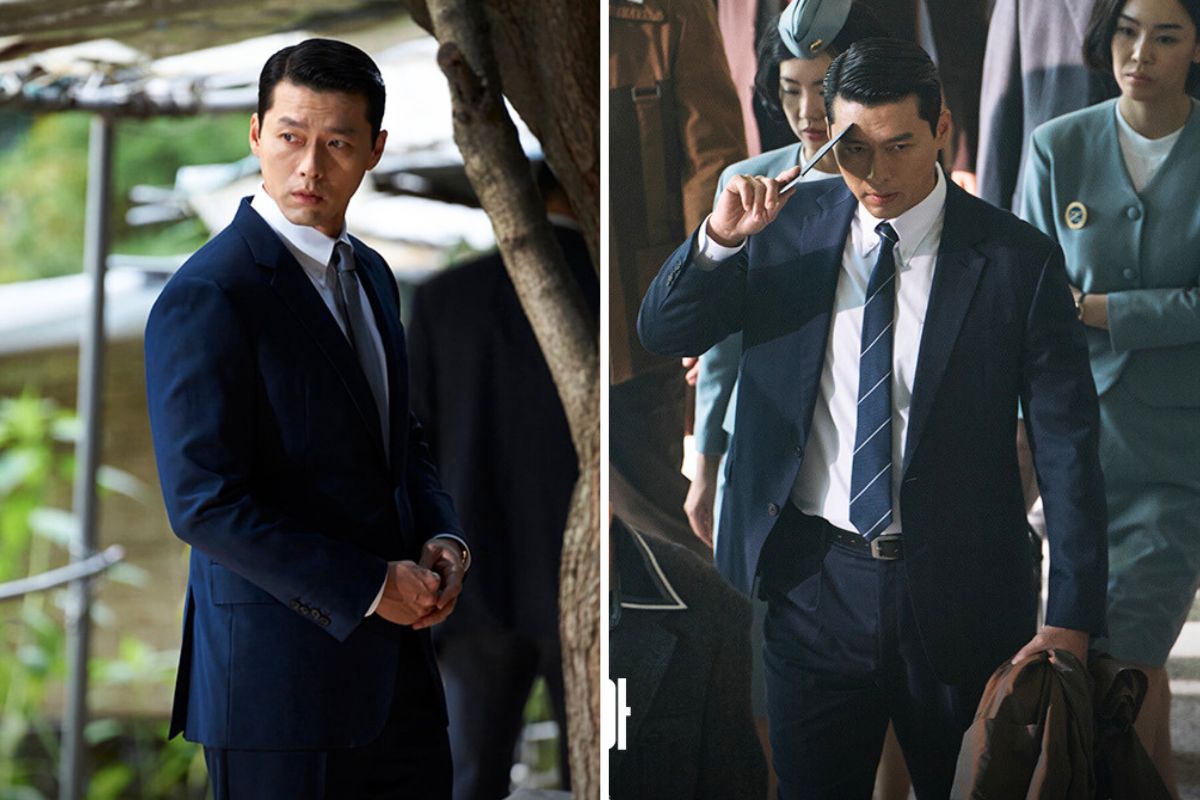
Reframing Intelligence in the Public Eye
According to official statements cited by The Korea Times, the appointment is designed to raise awareness about espionage, counterintelligence, and national security—topics that are increasingly relevant in a rapidly shifting geopolitical environment. As threats grow more complex and less visible, intelligence agencies worldwide are being compelled to rethink how they communicate with the public.
In this context, the NIS has intensified its outreach efforts, aiming not only to inform but also to educate. By leveraging a figure of Hyun Bin’s stature, the agency seeks to translate abstract, often opaque security concepts into narratives that resonate with everyday audiences.
Importantly, the title itself is symbolic. As emphasized across multiple reports, Hyun Bin will not be involved in operational intelligence work. Instead, his role functions as a cultural intermediary—an accessible face representing a field that is typically distant from public understanding.
The Strategic Power of Celebrity Influence
The decision to appoint Hyun Bin reflects a broader global trend: the strategic use of celebrity influence to shape public discourse. In South Korea, where entertainment and media wield significant cultural power, such a move is particularly effective.
The Korea Herald notes that the appointment comes at a time when South Korea is placing renewed emphasis on counterintelligence, especially following updates to espionage-related legislation and policy frameworks. In this climate, public awareness is no longer optional—it is integral to national resilience.
Hyun Bin’s involvement is therefore more than symbolic; it is strategic. His widespread recognition—spanning South Korea, Asia, and international markets—allows key messages to reach audiences that traditional government channels might struggle to engage.
As reported by Korea JoongAng Daily, the actor will participate in campaigns, public service initiatives, and educational programs designed to demystify counterintelligence. The goal is not only to inform but to cultivate a more security-conscious society.

A Persona Built on Discipline and Authority
Hyun Bin’s selection is deeply aligned with his on-screen identity. Over the past two decades, he has consistently portrayed characters defined by discipline, restraint, and moral complexity—qualities that mirror the ethos of intelligence and military professions.
His breakthrough role in My Lovely Sam Soon established him as a leading man, but it was his later performances that solidified his reputation for depth and versatility. In Secret Garden, he balanced charisma with emotional nuance; in Memories of the Alhambra, he navigated a psychologically complex narrative; and in the global sensation Crash Landing on You, he portrayed a North Korean officer with striking composure and humanity.
These roles have collectively shaped a public image that feels both authoritative and trustworthy—an image that seamlessly aligns with the symbolic responsibilities of his new title.
Beyond Stardom: A Global Cultural Figure
Born Kim Tae-pyung in 1982, Hyun Bin emerged in the early 2000s and quickly rose to prominence. Unlike many contemporaries, his career has been marked not by fleeting popularity but by sustained relevance. His ability to adapt across genres—romantic drama, action, psychological thriller—has ensured his longevity in an industry known for its volatility.
Equally significant is his international appeal. With the global rise of Korean entertainment, particularly in the streaming era, Hyun Bin has become a recognizable figure far beyond national borders. His appointment, therefore, carries implications not just domestically but also in terms of South Korea’s cultural diplomacy.

Private Life, Public Fascination
Despite his immense visibility, Hyun Bin has maintained a notably private personal life. In 2022, he married actress Son Ye Jin, his co-star in Crash Landing on You, in what was widely described as a union of two of Korea’s most beloved stars. The couple welcomed their first child shortly thereafter.
Yet, in contrast to their public personas, both actors have chosen to keep their family life largely out of the spotlight—a decision that has only deepened public respect for their discretion.
A New Model of Engagement
Hyun Bin’s appointment ultimately reflects a shifting paradigm in how institutions communicate with society. In an age defined by information overload and fragmented attention, credibility alone is no longer sufficient—visibility and relatability are equally critical.
By aligning itself with one of the country’s most respected cultural figures, the NIS is not merely promoting awareness; it is redefining how national security is perceived, discussed, and understood.
In Hyun Bin, the agency has found not just a celebrity, but a symbol—one capable of bridging the gap between secrecy and society, and of bringing the invisible world of intelligence into clearer public focus.